
There are three main types of exhibition stands that you will come across: shell scheme, modular stands, and bespoke/custom stands. The sustainability performance of these three will vary depending on factors such as material choices, energy usage, transportation and degree of reuse.
The way that an exhibition stand is designed, built, used and handled all plays a part in its carbon footprint, which is why it’s so important to consider from the beginning.
Shell scheme stands - starting small, still making an impact
A shell scheme is the basic framework provided by event organisers. It typically features plain wall panels with a simple aluminium frame, ready to be dressed by an exhibitor’s own graphics, flooring and furniture. Shell schemes are popular because they are a cost-effective and convenient way to showcase a brand, acting as a blank canvas.
As shell schemes comprise a shared, reusable aluminium structure, they can be reused by organisers again and again. Whilst the structure itself is reused - making it a more environmentally-friendly option - the choices that an exhibitor makes when personalising the stand are what can increase carbon emissions.
For example, the graphics and panels provided by an exhibitor are typically printed for a specific show, often sized to specific dimensions that will make them harder to reuse. Certain substrates can also require specialist handling after printing, meaning that many event graphics end up being thrown away.
Treating graphics as a single-use item, rather than something that can be repurposed, can significantly increase your carbon footprint, so consider working with a supplier that can offer standardised graphics that can be reused instead. GES also manages post-show removal and recycling, even for materials that can be difficult to recycle.
Floor coverings are also a culprit, often being installed for one event only before being thrown away. Flooring that can be reused is a far more environmentally-friendly option, as are floor coverings that can be recycled - we can offer guidance on better choices.
Shell scheme stands are an accessible starting point for new exhibitors, and can be low impact, but poor decisions around graphics, flooring and stand extras can negate these environmental advantages.
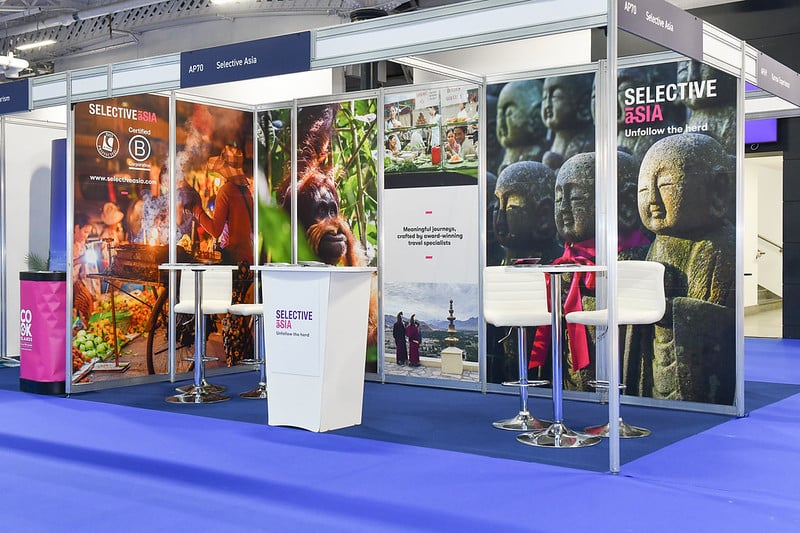
Modular stands - frameworks built for reuse
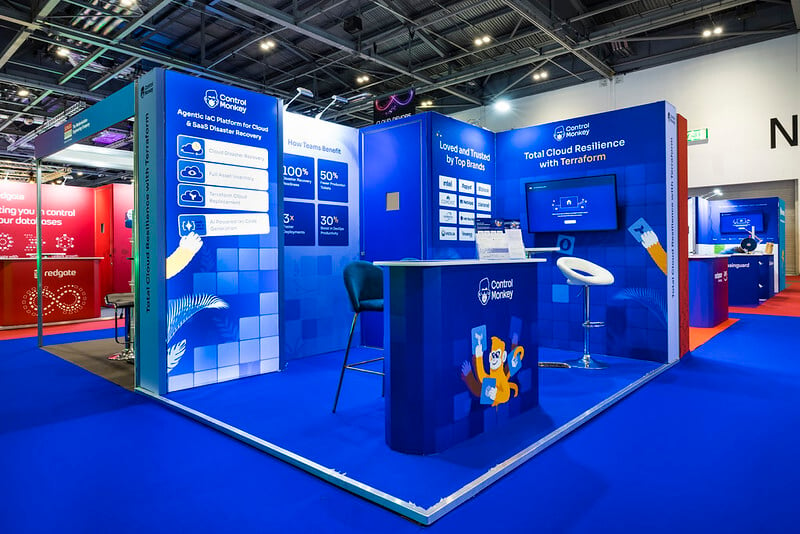
Modular exhibition stands are specifically designed for reuse and reconfiguration. These stands comprise a lightweight aluminium frame and interchangeable components like panels and counters. Modular systems are versatile and adaptable, making them incredibly popular with exhibitors.
As modular stands are designed with reuse in mind, they are the most sustainable type of stand for repeat exhibitors. The aluminium frames are produced in set sizes, so that they can be reused across multiple trade shows and events. Elements like panels (both fabric and rigid), lightboxes and LED and digital elements such as screens can easily be swapped out to keep things fresh.
Unlike single-use stands that are thrown away after one show, system stands are created to be rearranged, not rebuilt.
Transporting exhibition stands to and from an event can also be a significant source of emissions, especially if they need to be transported long distances. Ideally, you should look for event partners that are based locally to minimise this. GES is located onsite at two of the biggest venues in the UK, which significantly reduces the environmental impacts related to the transportation of stands.
If you’re looking at programme-level sustainability, a modular stand brings the strongest benefits, as it’s structurally robust, contains high recycled content, and is designed for reuse. We can help you to plan a multi-show programme using the same modular system, which will minimise production emissions, waste and transport impacts over the year.
Bespoke/custom stands - when you need something one-off
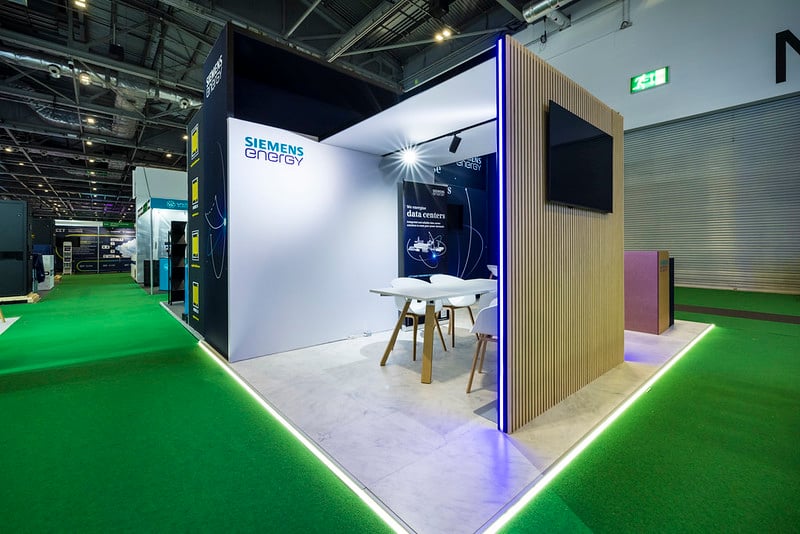
Bespoke stands are fully-tailored exhibition stands, built specifically for single events, typically a flagship launch or a hero show. As they are custom, you can be incredibly creative with the space. Every element is unique, giving you complete free rein over the design, functionality and messaging of the space.
A custom stand is typically built for a single event and they can create a significant amount of waste. The complex nature of a custom stand also means that they are resource-intensive to build, using lots of energy, materials, and labour. Transporting a custom stand can also generate higher emissions, as they are usually big and bulky.
However, there are times where another type of exhibition stand just won’t do. If a custom stand is best for your next event, some forward planning can make it more sustainable.
It could be designed more like a modular stand, with structural elements that can be disassembled and reused for multiple events, rather than being disposed of. If you will be furnishing your stand, consider rental furniture instead of creating it from scratch.
Using more environmentally responsible materials, like certified timber, low-VOC paints and finishes, and circular materials and flooring can also reduce carbon emissions. Consider the end-of-life planning for the exhibition stand, such as how materials can be separated to maximise the amount of recycling. If you work with the preferred stand builder for the event, they will handle the post-show recycling, as they have the capabilities to recycle materials in bulk.
A hybrid approach to an exhibition stand is a growing trend, with more exhibitors opting for stands with custom features built on top of a modular aluminium frame. This compromise means you’ll still get a visually impactful stand, but will significantly cut down on the material and waste of a one-off custom stand.
Many clients come to us thinking that a custom stand is the way to go, but often their goals can be achieved with a hybrid or modular stand instead.
How to make a stand decision you can defend
The stand type matters, but what matters more is the reuse plan behind it. A modular stand isn’t automatically a “better” option if it’s only used once, and a custom stand isn’t automatically “bad” if it’s designed with reuse, disassembly, and end-of-life handling in mind.
A good decision is one you can explain clearly to stakeholders:
- Why you chose the approach
- What you've done to reduce impact
- What you will reuse
- What will happen after the show
- How you will measure it
No matter the type of exhibition stand you choose, there will be choices that you can make to improve the sustainability of your stand and reduce your overall carbon footprint at an event.
What next: stand type checklist
Before you commit to a stand route, ask:
- How many shows does this structure ned to deliver before replacement?
- What proportion of the stand is reusable or modular?
- Can the stand be reconfigured for different footprints and layouts?
- Can we minimise single-use elements (flooring, finishes, one-off features)?
- What happens after breakdown, and can the supplier evidence recycling routes?
- Will we receive post-show data on reuse, recycling and waste?
- If we can't reuse elements of our stand, can it be used by someone else for another purpose?
If you can answer those questions, you can move forward confidently, without sustainability feeling like guesswork.
Global Event Specialists
We specialise in delivering extraordinary exhibition experiences across the globe, so if you have any questions about our exhibition stands and event services, get in touch with the GES team.
.png)
ABOUT THE AUTHOR
Lauren McLean
Lauren is a marketing and events professional focused on helping exhibitors create impactful, results-driven experiences on the show floor. She specialises in developing engagement strategies and branded activations that attract audiences, drive meaningful interactions, and maximise ROI.