
Designing a small trade show booth can feel challenging, especially when you are exhibiting for the first time. With limited space, every detail matters. The footprint may be modest, but the impact does not have to be. A well planned 10x10 or 10x20 booth helps people understand what you offer within seconds, encourages them to step inside, and gives your brand a presence that feels intentional on a busy show floor. For many first time exhibitors and marketing decision makers, these booth sizes offer a comfortable starting point. They are easier to manage, easier to staff, and much simpler to plan than larger builds. When the design reflects how people actually move, pause, and interact at a trade show, even a small booth can create meaningful engagement. This article blends practical booth layout ideas with human centered design principles so your team can get more value from the space you already have.
Designing a 10x10 booth that supports natural conversations
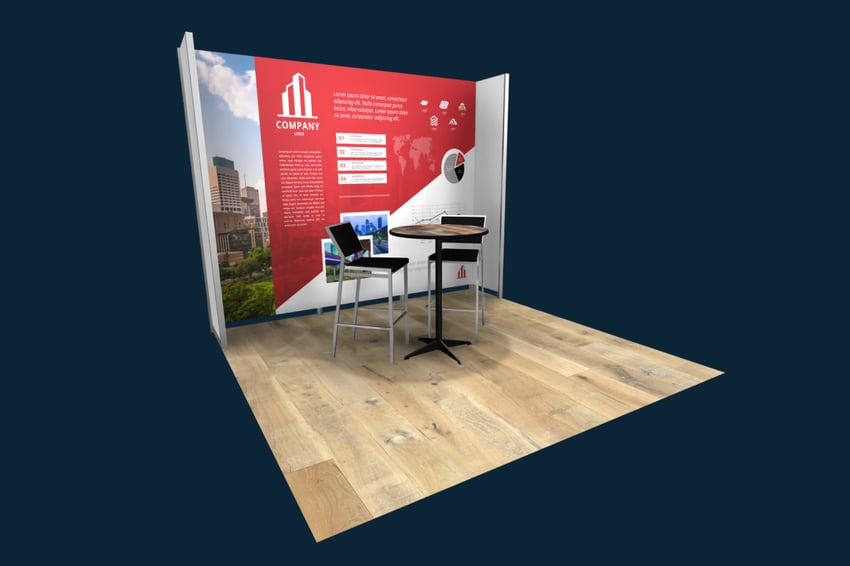
A 10x10 space may be compact, but it can still feel open and welcoming with thoughtful planning. When seated meetings are part of your strategy, every inch becomes important. A table with two chairs shifts behavior in noticeable ways. Visitors tend to step into the booth rather than linger in the aisle, and conversations often become more focused and comfortable. Furniture scale plays a major role in how the space functions. Right sized tables and chairs keep the aisle open and prevent the booth from feeling blocked, which helps people see inside from a distance. It also keeps your team mobile. They can greet visitors easily, move around the space without squeezing past furniture, and guide conversations naturally. This type of setup works best when meetings are scheduled ahead of time or when your team expects longer, more intentional discussions. The seating itself signals what kind of interaction visitors can anticipate, and that clarity removes uncertainty for both sides.
Creating flow and clarity in a 10x20 booth
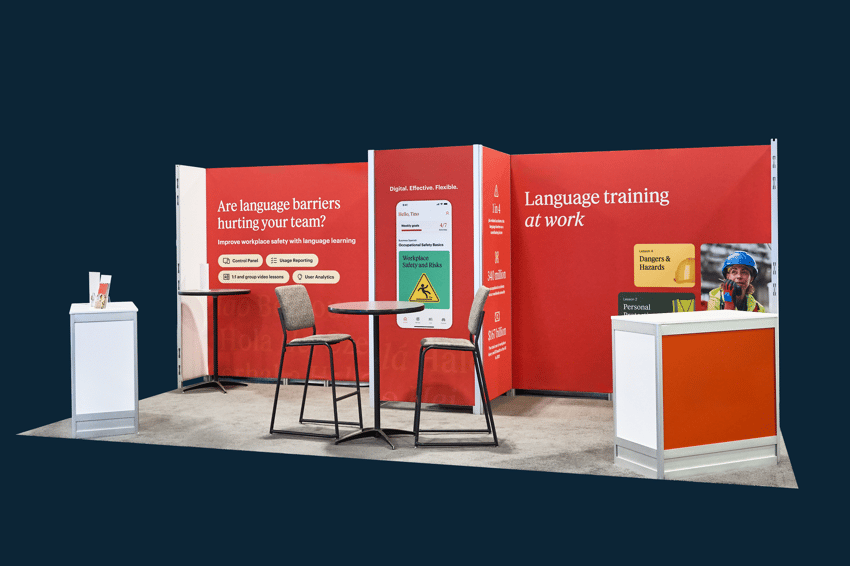
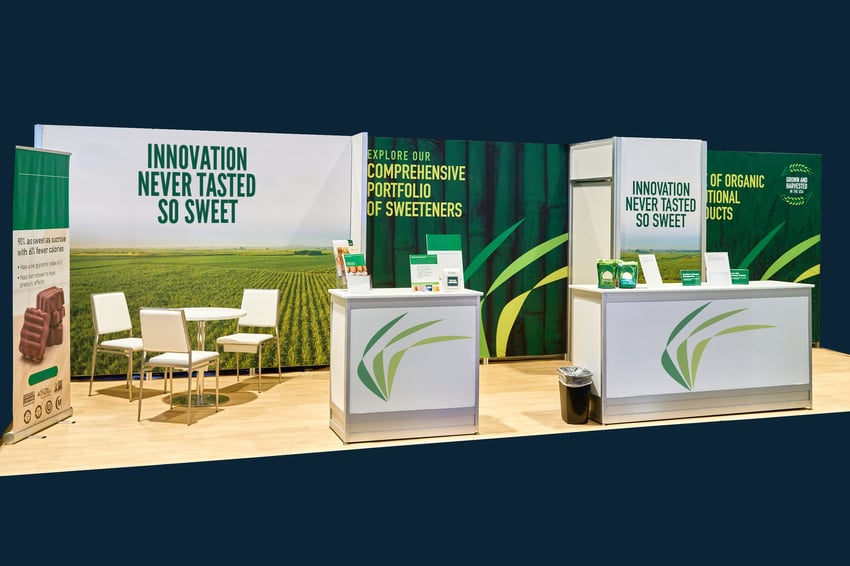
A 10x20 booth introduces more breathing room and flexibility. With twice the width, you can create clear zones that help visitors understand the space the moment they approach. Counters become natural touch points for quick questions, product demos, or lead capture. They make it easier for your team to welcome people without stepping into the aisle or feeling rushed. Storage is also an important part of keeping the booth functional throughout the day. Built in storage keeps extra materials and supplies out of view so the booth always looks polished. When clutter is hidden, the booth feels consistent from open to close and your staff can stay focused on conversations instead of managing piles of handouts. Meeting areas in a 10x20 do not require walls to feel defined. Placement and orientation do the work. Seating positioned slightly away from the aisle reduces noise and distraction while keeping the booth open and approachable. Visitors get privacy without losing the sense of connection to the show floor.
Product displays that attract attention without crowding the space
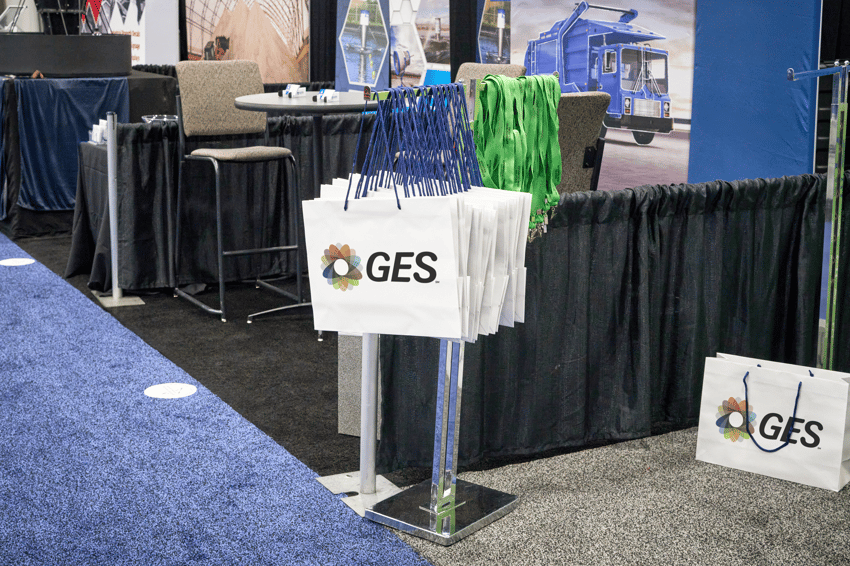
Product placement shapes the first impression. When products sit close to the aisle, visitors can understand your offering in a matter of seconds. This quick comprehension helps people transition smoothly from curiosity to conversation. Spacing is often underestimated, yet it has a major influence on engagement. When products are packed too tightly, visitors can feel overwhelmed or unsure where to look. Clean, simple layouts let each product stand out and make the overall booth feel more inviting. Open space does more than improve aesthetics. It helps people feel comfortable entering the booth instead of hesitating at the aisle. Positioning products near conversation areas also helps the flow. It gives your team natural touch points to guide discussions, demonstrate features, and keep the interaction moving without making the booth feel busy.
Coordinating furniture and flooring for a cohesive look
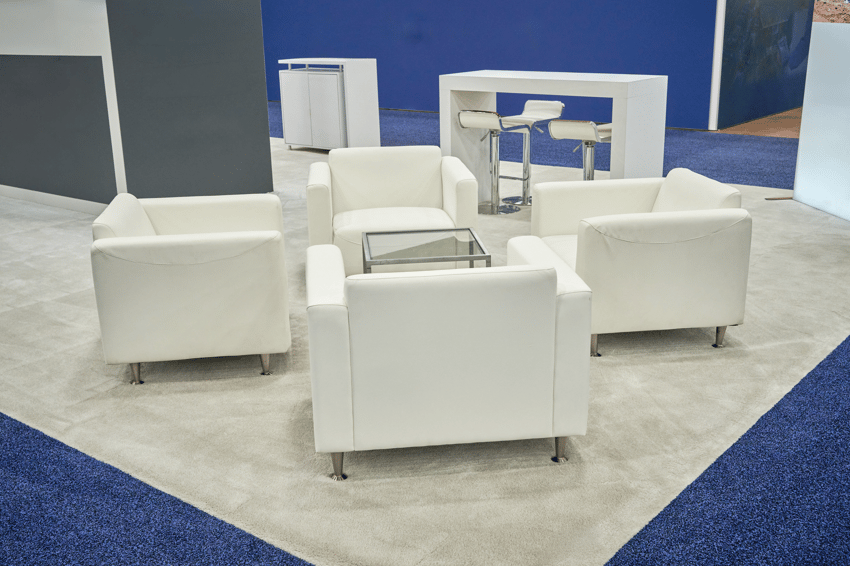
A small booth feels more polished and more memorable when the visual details work together. Coordinated furniture and flooring create a sense of order and intention. When colors and finishes align, the booth looks clean, organized, and professional even with standard rental pieces. Consistency reduces visual noise and helps your branding stand out. Visitors do not consciously analyze the materials, but they feel the difference between a cohesive space and one that seems pieced together.
Keeping your brand visible throughout the day
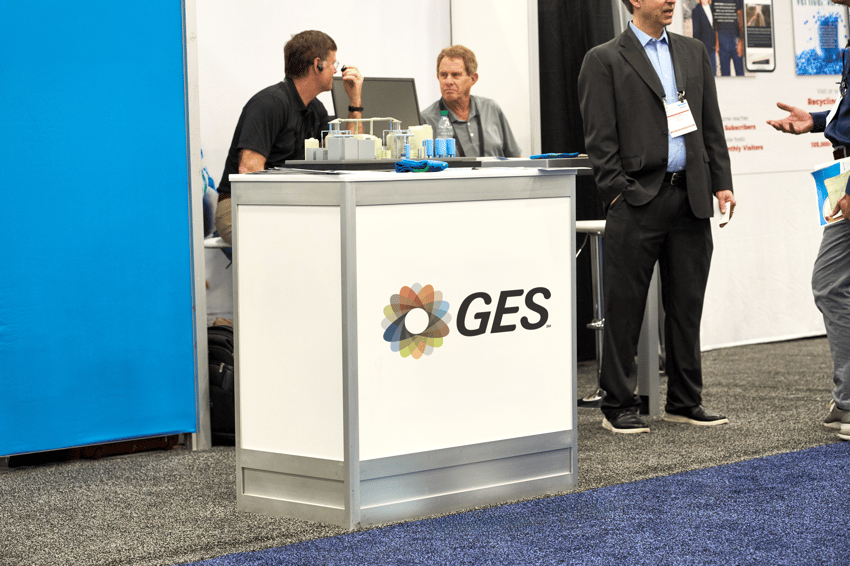
Counters are often the unsung hero of small booth design. As crowds grow, back walls get blocked, especially during peak hours. Counters, on the other hand, stay visible from multiple directions. Adding your logo or key visuals to the front of a counter keeps your brand present even when the booth is busy. In small footprints, counters sometimes do more branding work than walls or overhead elements. Their position near the aisle makes them a consistent point of recognition.
Designing with purpose creates stronger engagement
Small trade show booths deliver their best results when every element has a purpose. Layout guides movement. Storage stays tucked away. Products are easy to understand at a glance. Finishes work together so the booth feels clean and cohesive. When design decisions reflect how attendees behave in real environments, the space becomes intuitive to navigate. First time exhibitors often find that 10x10 and 10x20 booths give them the right amount of room to learn, experiment, and build confidence without managing a complex exhibit. These footprints offer clarity and focus. They also provide a foundation that scales easily as your program grows. GES designs booths based on how people move, stop, and engage at live events. The goal is always function, clarity, and usability because thoughtful planning leads to stronger engagement, even in a small footprint.

ABOUT THE AUTHOR
Linda Chandler