
A small exhibition stand is most effective when it has a clear purpose, a simple message, eye-catching graphics, an open layout, and materials that can be used again. Keep things simple and focus on connecting with people instead of filling the space with too much ‘stuff’.
For boutique brands and specialist service providers, entering a large exhibition hall can be intimidating. Seeing huge custom stands might make you question how your smaller space can compete. However, you do not need a big stand to succeed at a trade show.
A small exhibition stand can still attract attention, encourage real conversations, and deliver great results if you have a clear plan. With less space, your team has to focus on the most important parts of your brand story. Every bit of space should have a purpose, so there is no room for confusion or extra clutter.
With clear messaging, good graphic design, and a friendly layout, your team can turn a simple stand into a great place to meet new leads. This guide shares practical tips to help you make the most of your small trade show booth and create the right setting for valuable conversations.
Why a small exhibition stand can deliver big results
Many marketing teams think they need a large space to look professional. But a small exhibition stand can work very well if it has a clear purpose. Smaller stands often create a more personal and focused setting, which makes it easier to start direct conversations with attendees.
Instead of trying to show too many products or using mixed branding, a small stand helps keep your message clear. You share one main message and highlight your main product or service. This focused approach lets visitors quickly see who you are and why they should stop by.
How to design a compact trade show stand for face-to-face conversations
The real value of a trade show is meeting people in person. Nick Pulley from Selective Asia shared this idea on LinkedIn during the Destinations travel show, saying that face-to-face meetings are much more rewarding than just working on computers or searching databases.
Small stands should focus on making face-to-face conversations easy. Set up your space so your team can talk to visitors easily. Place staff near the front to greet people, not behind a big counter. Make sure there are no barriers at the entrance and give your team open, comfortable areas to meet with potential clients.
What are the best ways to clarify messaging on a small stand?
When space is tight, it is important to show your brand clearly. People walking by only spend a few seconds looking at your booth. If they do not quickly see what your business offers, they will move on.
To make your message clear, use one main headline. Make sure your text is large, easy to read, and positioned high enough for people to see from a distance. Do not fill the walls with lots of text or bullet points. Let your team share the details in person, and use the stand’s message to catch people’s interest.
How do exhibition stand graphics carry a brand story?
In small spaces, your stand graphics do a lot of the work. They set the mood for your booth and quickly show what your brand is all about.
Good images are essential. Pick high-quality, eye-catching visuals that appeal to your audience. For example, a luxury travel brand should use beautiful, high-resolution photos of destinations rather than generic stock photos. If you can, use large, seamless graphic panels to give your booth a clean, professional look and make the space feel bigger.
How can exhibitors keep a small booth open and usable?
One mistake small exhibitors often make is putting too much furniture or equipment in their space. A crowded stand feels unwelcoming and can stop visitors from engaging.
Keep your stand open and easy to use by thinking about how visitors will enter. Use tall, narrow counters instead of big desks to save space. Add smart storage, like lockable cabinets in your counter, to hide coats, bags, and extra brochures. Only add seating if your team needs to have long talks with visitors.
Why choose reusable materials for compact trade show stands?
Today, marketing teams care about saving money and being sustainable. Building a stand for just one event is not usually a good use of resources. Instead, pick materials that you can use again for future events.
If your team goes to several shows each year, use graphics that can be reused or folded. Portable graphics that roll or fold are easier to move and help cut down on shipping costs. With a good modular frame and panels you can swap out, you can adjust your stand for different events all year round.
Case study: Selective Asia at Destinations London 2026
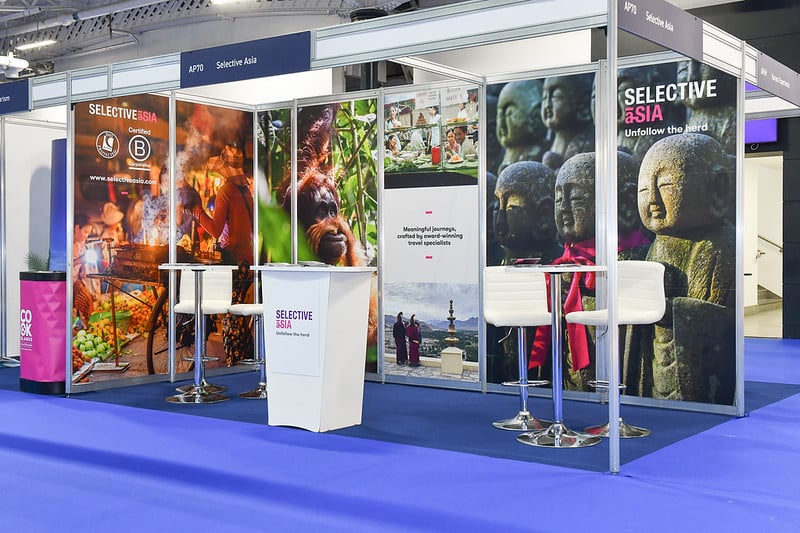
Selective Asia, a travel brand focused on culture and responsibility, shows how to make the most of a small space. For Destinations London 2026 at Olympia London, they needed a stand that shared their brand story and was practical for their team to use.
Operating within a compact 2x4.5m footprint, Selective Asia trialled a foldable inlay graphics solution provided by GES. This approach allowed them to display stunning, seamless imagery that instantly conveyed their unique travel experiences. The foldable graphics provided a practical, reusable material angle, ensuring the brand could easily pack down and transport their high-impact visuals for future events. The result was a warm, welcoming space optimised purely for those critical face-to-face client conversations. Read the full case study here.
What checklist should you use for small exhibition stand ideas?
Before finalising your compact trade show stand design, run through this practical checklist to ensure your space will perform:
-
What is the single main message we want people to remember?
-
Is our brand name and primary offering clearly visible from the aisle?
-
What specific conversations do we want to trigger?
-
Are there any physical barriers blocking visitors from stepping onto the stand?
-
Will we reuse these graphics and materials at future events?
-
What storage or furniture will genuinely make the on-site team’s job easier?
Plan your compact exhibition stand with GES
You do not always need the biggest stand in the hall. What matters is that your stand does its job clearly. GES helps exhibitors design small spaces with clear messages, smart layouts, and materials you can use again. As friendly exhibition experts, GES helps marketing teams make smart choices to boost their brand. Read our FAQs for more insights.
Are you planning a small exhibition stand? Talk to GES today to find out how to make your space work better, from stand graphics and layout to easy setup, storage, and reuse.
.png)
ABOUT THE AUTHOR
Lauren McLean
Lauren is a marketing and events professional focused on helping exhibitors create impactful, results-driven experiences on the show floor. She specialises in developing engagement strategies and branded activations that attract audiences, drive meaningful interactions, and maximise ROI.